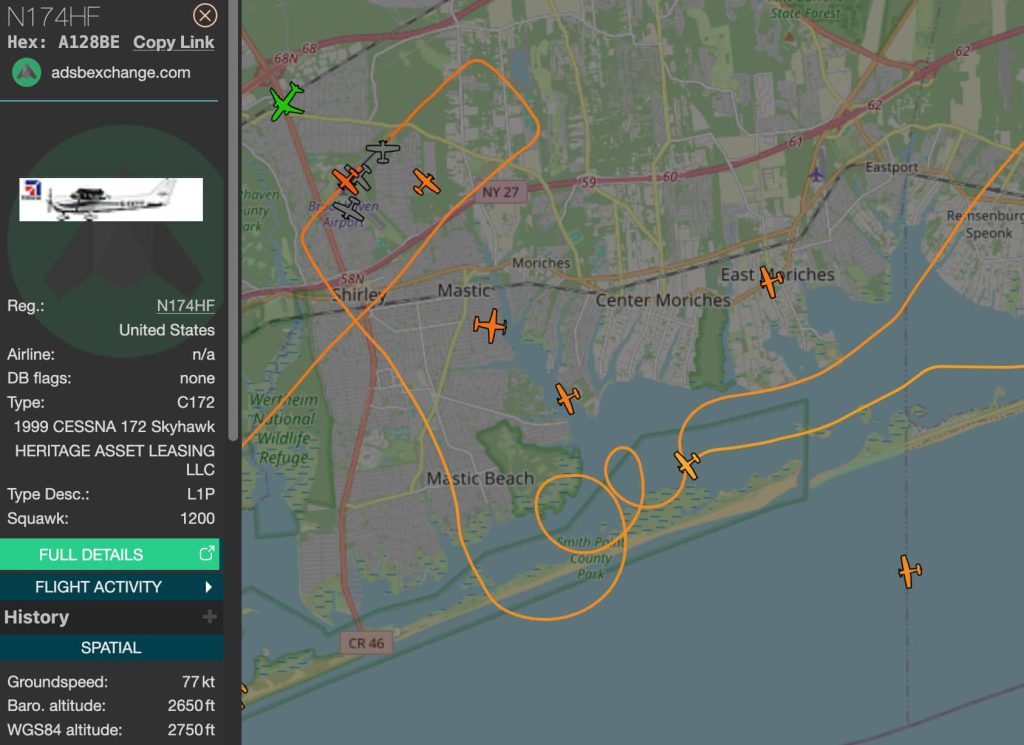
Piston-engine aircraft like this Cessna 172 Skyhawk (N174HF, registered to Heritage Asset Leasing), are the only aircraft that still use leaded fuel.
Nationally, lead emissions from aircraft (primarily small piston-engine aircraft) that use leaded gasoline are the largest single source of lead to the air.
EPA
According to data from the U.S. Environmental Protection Agency (EPA), aircraft operating on leaded gasoline account for 70% of all lead entering the atmosphere annually in the United States. While communities near airports face the highest risks of lead exposure, it’s important to remember that there are 8 airports spread across tiny Long Island, meaning that we are all practically near an airport. (I’m pretty sure people move to Long Island for quality of life, not to be exposed to lead.)
The evidence regarding lead pollution falling from piston-engine aircraft is scientifically definitive. A massive body of research provides direct evidence of how this lead settles onto the ground. Isotopic signatures, for example, trace lead found in surrounding communities directly back to aviation gasoline. This proves that the lead didn’t come from old paint or historic leaded car gasoline—it came from aircraft exhaust.
When lead is emitted from a plane’s exhaust, it doesn’t stay floating forever. It attaches to airborne particulates and eventually drops to the earth via gravity or rain (a process called deposition). Soil and house dust testing in residential communities downwind of general aviation airports consistently shows significantly higher concentrations of lead compared to upwind areas. Once this exhaust settles into the dirt, it remains trapped in the topsoil indefinitely.
Peer-reviewed studies have consistently shown that children living downwind or within close proximity to these airports have measurably higher blood lead levels.
Because this mountain of evidence is so conclusive, the EPA issued an official Endangerment Finding stating that lead emissions from these specific aircraft threaten public health and welfare.
So the next time you see (or hear) a small propeller plane flying overhead, even if the noise doesn’t bother you, you should think twice about whether it’s really not causing you or your children any harm.